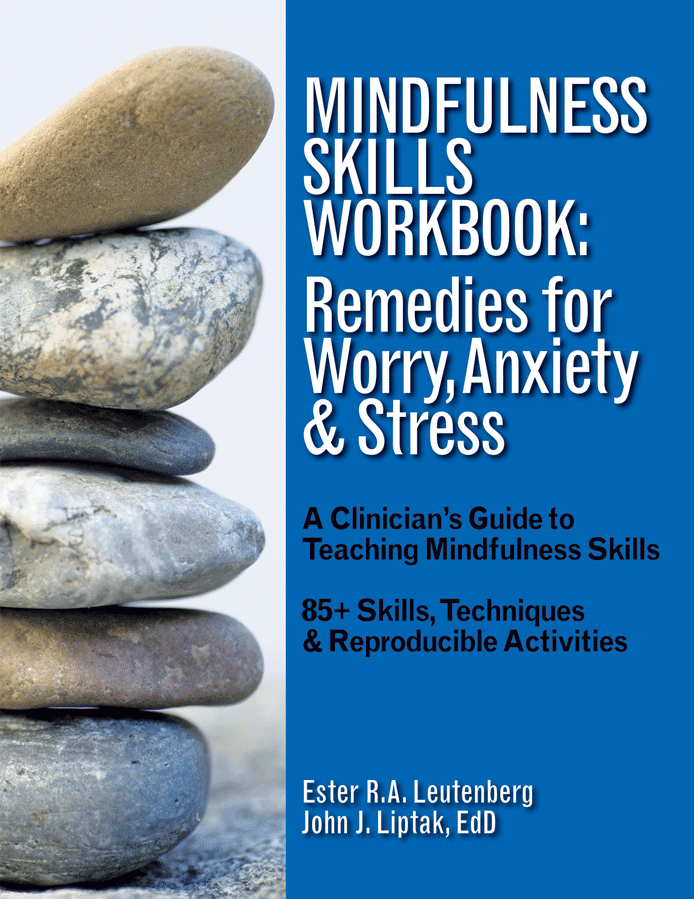
Build Present-Moment Awareness to Reduce Worry, Anxiety, and Stress
The Mindfulness Skills Workbook provides counselors, therapists, educators, and group facilitators with reproducible assessments and guided activities that help participants slow down, observe without judgment, and respond with intention. This mindfulness skills workbook enables clients to notice thoughts, emotions, and sensations, move out of autopilot, and manage daily hassles with greater awareness and calm.
Mindfulness helps participants cultivate non-judgmental awareness, paying attention on purpose, and staying openhearted and compassionate. Through field-tested activities and assessments, participants learn to reduce worry, anxiety, and stress by replacing automatic reactions with mindful responses that foster self-regulation and emotional balance.
Why This Mindfulness Workbook Works
This workbook blends reproducible assessments, discussion questions, and guided self-reflection to help participants examine their patterns of stress and develop practical mindfulness habits. Facilitators can use it to teach awareness, acceptance, and relaxation strategies that lead to greater focus and emotional well-being.
Chapters include:
• Chapter 1 – Are You on Autopilot? Recognize triggers, interrupt habits, and insert mindful pauses during daily hassles.
• Chapter 2 – Do You Live a Purposeful Life? Build awareness of body and senses to observe thoughts and sensations with curiosity.
• Chapter 3 – Do You Live in the Present Moment? Let go of past and future focus to bring full attention to each moment.
• Chapter 4 – Do You Accept Others Without Judging? Practice non-judgmental observation and compassionate acceptance of self and others.
• Chapter 5 – Do You Have a Toolbox of Mindfulness Techniques? Apply portable practices — breath work, observation, short meditations, journaling, and more — to reduce daily stress.
Who Benefits from this Mindfulness Resource
• Counselors and therapists facilitating mindfulness-based practices for individuals or groups.
• Social workers and case managers integrating mindfulness into care plans for stress reduction.
• Educators and group leaders teaching awareness, attention, and self-regulation techniques.
• Adults seeking calm and practical strategies to manage worry, anxiety, and daily hassles mindfully.
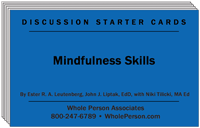 A Companion Mindfulness Skills Card Deck for Deeper Conversations
Pair the Mindfulness Skills Workbook with the Mindfulness Skills Card Deck.
Using the Discussion Starter Card Deck will break the ice, encourage openness, and help introduce a specific subject. Activity handouts included in these workbooks are reflective, easy-to-use exercises, presented in a variety of formats to accommodate multiple intelligences and different learning styles. Each question corresponds to a page in the workbook.
Sample Questions
• Some daily hassles are more difficult to deal with than others. What is one of your more difficult daily hassles? Ask others in the group.
• What does this Wayne Dyer quote mean to you? “The truth is that there is no actual stress or anxiety in the world; it's your thoughts that create these false beliefs. You can't package stress, touch it, or see it. There are only people engaged in stressful thinking.” Ask others in the group for their interpretation.
• What are some of the ways and places you can meditate for a quick few minutes when you feel the need?
Take the Next Step Toward Mindful Living
The Mindfulness Skills Workbook is an effective resource for facilitators helping clients cultivate awareness and calm through proven mindfulness practices. Strengthen these lessons or tailor them for different populations with these complementary resources:
Frequently Asked Questions about the Mindfulness Skills Workbook
Are the worksheets and assessments reproducible?
Yes. All handouts and assessment tools are reproducible for clients, groups, or classrooms.
Can it be used with both individuals and groups?
Absolutely. Activities adapt easily to one-on-one counseling, psychoeducational groups, or self-guided practice.
How are the chapters organized?
They progress from interrupting autopilot to cultivating purpose, living in the present, accepting others without judgment, and applying techniques for everyday calm.
What outcomes can participants expect?
Common benefits include increased acceptance, greater awareness, calmer reactions to stress, and improved focus, self-awareness, and emotional well-being.