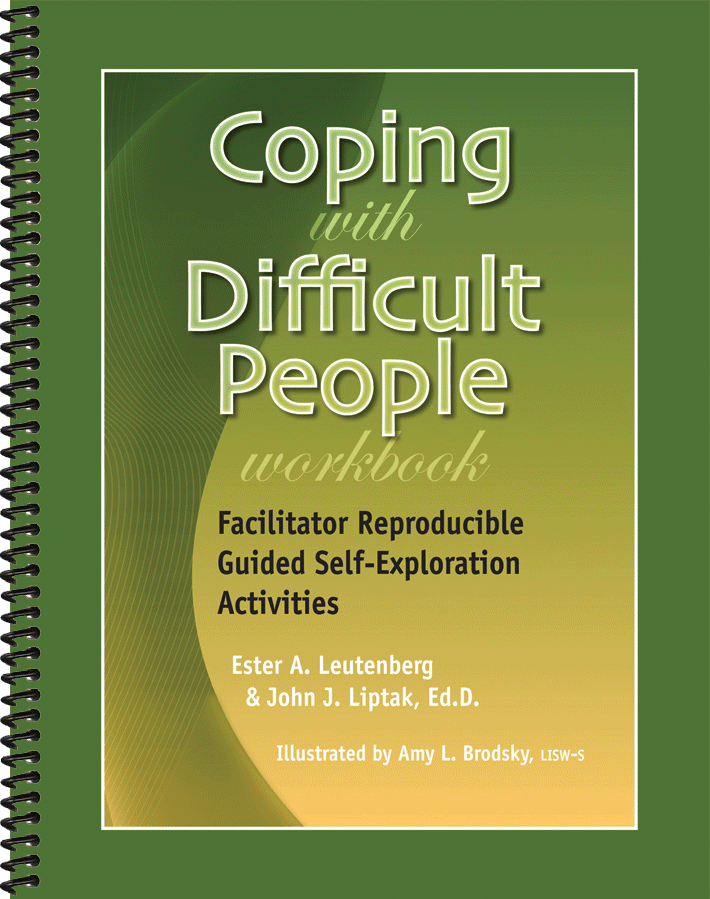
Practical Tools to Navigate Difficult Relationships
The Coping with Difficult People Workbook equips professionals with reproducible assessments and guided activities that help participants understand the impact of challenging personalities and develop constructive ways to respond. This coping with difficult people workbook builds insight, communication skills, and resilience for handling difficult people in everyday life.
Across four focused chapters (Types of Difficult People, Communicating with Difficult People, Coping Skills, and Assertive Confrontation Style), participants explore common patterns of behavior and learn practical strategies to handle frustrating situations. Facilitator notes and reproducible handouts make this workbook adaptable for both individual sessions and group settings.
Why This Difficult People Workbook Works
This workbook combines structured assessments with reflective activities to help participants identify difficult personality types, strengthen communication, and practice coping strategies. Facilitators can guide clients in developing assertiveness, building positive interactions, and reducing stress when dealing with difficult people.
Chapters include:
-
Chapter 1: Types of Difficult People: Introduces common categories of difficult personalities and how they affect others.
-
Chapter 2: Communicating with Difficult People: Helps participants evaluate and improve communication skills to reduce conflict.
-
Chapter 3: Coping Skills: Guides participants to explore how well they are coping now and to practice healthier responses.
-
Chapter 4: Assertive Confrontation Style: Encourages participants to learn and apply effective confrontation techniques in a positive and respectful way.
Who Will Benefit
-
Facilitators and group leaders working with clients on interpersonal skills
-
Counselors and therapists teaching coping strategies for stress in relationships
-
Educators and trainers addressing communication and conflict management
-
Adults facing challenges with colleagues, family, or community members who want practical tools for more positive interactions
 A Companion Coping with Difficult People Card Deck for Deeper Conversations
Pair the Coping with Difficult People Workbook with the Coping with Difficult People Card Deck.
Using the Discussion Starter Card Deck will break the ice, encourage openness, and help introduce a specific subject. Activity handouts included in these workbooks are reflective, easy-to-use exercises, presented in a variety of formats to accommodate multiple intelligences and different learning styles. Each question corresponds to a page in the workbook.
Sample Questions
-
What are some of the characteristics of difficult people?
-
What is your communication style? Do you have lots of energy and control the conversation (Controller); listen a lot (Watcher); talk a lot (Performer); or have brief conversations with many people?
-
What are five examples of effective communication?
Take the Next Step in Managing Difficult People
The Coping with Difficult People Workbook provides reproducible assessments and guided activities to help participants identify personality patterns, practice communication skills, and strengthen coping strategies. Available in print or as a PDF eBook, it is a practical and flexible tool for facilitators, counselors, and individuals working to improve relationships.
For additional support, see the Coping with Everyday Stressors Workbook and Maintain Positive Healthy Relationships in Your Life.
Frequently Asked Questions About the Coping with Difficult People Workbook
How is the workbook organized?
Each chapter begins with an assessment followed by guided activities that focus on different aspects of managing difficult people.
Are the materials reproducible?
Yes. Worksheets, handouts, and activities may be copied freely for use with clients or participants.
Is it suitable for groups and individuals?
Yes. Activities are adaptable for both group facilitation and individual counseling.
What skills are included?
Recognizing personality patterns, practicing communication strategies, improving coping skills, and developing assertive confrontation techniques.