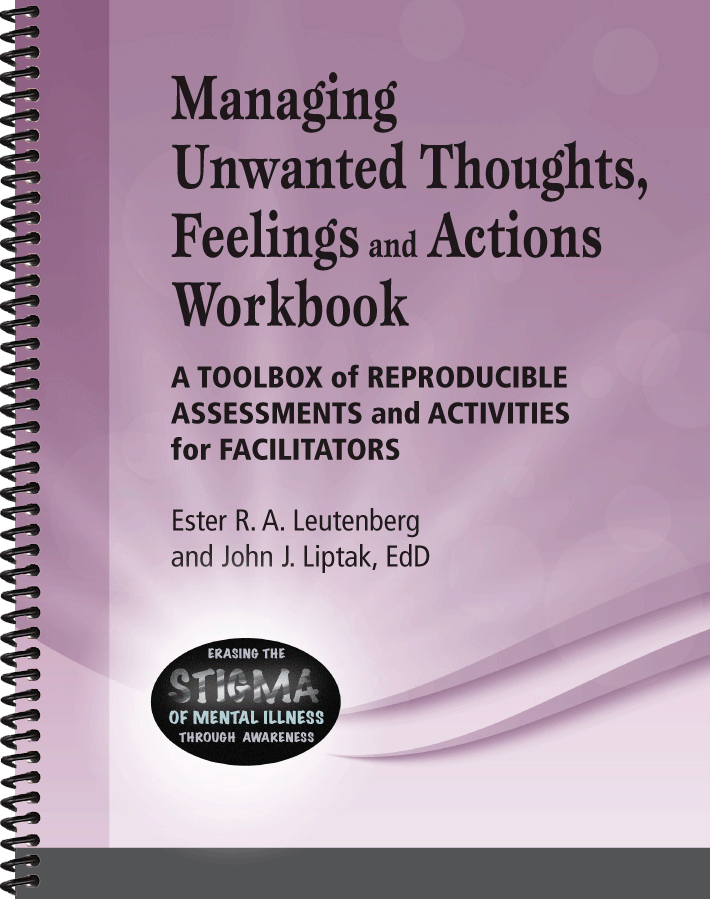
Practical Tools to Understand and Manage Unwanted Thoughts and Behaviors
The Managing Unwanted Thoughts, Feelings, and Actions Workbook provides facilitators, therapists, and individuals with reproducible assessments and guided self-exploration activities to help participants identify, understand, and manage distressing thoughts and behaviors. This intrusive thoughts workbook helps people recognize when their thinking or emotions have become distorted, develop healthy coping responses, and strengthen their sense of control and wellness.
Designed for flexibility, this workbook can be used in therapy, recovery, education, or self-help settings. Each reproducible worksheet offers a step-by-step framework to explore thought patterns, emotional reactions, and behaviors, encouraging participants to create new, positive habits.
This workbook is designed to use with clients who have been diagnosed with or may be showing signs of:
In this workbook, we have used “unwanted thoughts, feelings, and actions” as an umbrella phrase to describe mental-health issues related to these diagnoses.
Why This Workbook Works
This resource combines self-assessment with guided reflection to help participants understand and manage difficult mental and emotional patterns.
Modules include:
-
Unwanted Thoughts, Feelings, and Actions Symptoms: Identify the intensity of behavioral, cognitive, and affect issues.
-
Life Management Skills: Assess current strategies for daily functioning and coping.
-
Personal Wellness: Explore physical and emotional self-care habits.
-
Possibilities: Expand perspectives and goal-setting for a hopeful future.
-
Erasing the Stigma of Mental Health Issues: Challenge stigma and build understanding.
Who This Workbook Supports
-
Therapists and facilitators working with clients experiencing intrusive thoughts or emotional instability
-
Individuals seeking self-guided tools for understanding and managing distressing thoughts and behaviors
-
Support-group leaders addressing coping skills and reality testing
-
Educators and caregivers promoting mental-health awareness and empathy
 A Companion Managing Unwanted Thoughts, Feelings, and Actions Card Deck for Deeper Conversations
Pair the Managing Unwanted Thoughts, Feelings, and Actions Workbook with the Managing Unwanted Thoughts, Feelings, and Actions Card Deck.
Using the Discussion Starter Card Deck will break the ice, encourage openness, and help introduce a specific subject. Activity handouts included in these workbooks are reflective, easy-to-use exercises, presented in a variety of formats to accommodate multiple intelligences and different learning styles. Each question corresponds to a page in the workbook.
Sample Questions
-
How does your unrealistic thinking affect your day-to-day activities?
-
What are the risks and benefits of disclosing your unwanted thinking, feeling, and action issues in the workplace? Break participants into two groups, one that would disclose and one that would not. Have the two groups debate the issue.
-
Why is there a stigma of going to a mental-health therapist? What would you tell someone who is afraid to go to one for fear of the stigma attached to it?
Take the Next Step Toward Understanding and Empowerment
The Managing Unwanted Thoughts, Feelings, and Actions Workbook provides reproducible activities to help participants manage unwanted patterns, develop self-awareness, and improve daily functioning. Available in print or as a PDF eBook.
For additional support, see:
Frequently Asked Questions About the Managing Unwanted Thoughts, Feelings, and Actions Workbook
Who is this workbook designed for?
It is created for adults dealing with intrusive or distressing thoughts, emotional instability, or difficulty managing behaviors.
Are the activities reproducible?
Yes. All worksheets and assessments are fully reproducible for therapy, education, or group use.
Can this be used with individuals or groups?
Yes. The activities can be administered individually or in a group setting.
Does this workbook address stigma and self-acceptance?
Yes. The fifth module, Erasing the Stigma of Mental Health Issues, helps participants challenge stigma and build self-understanding.