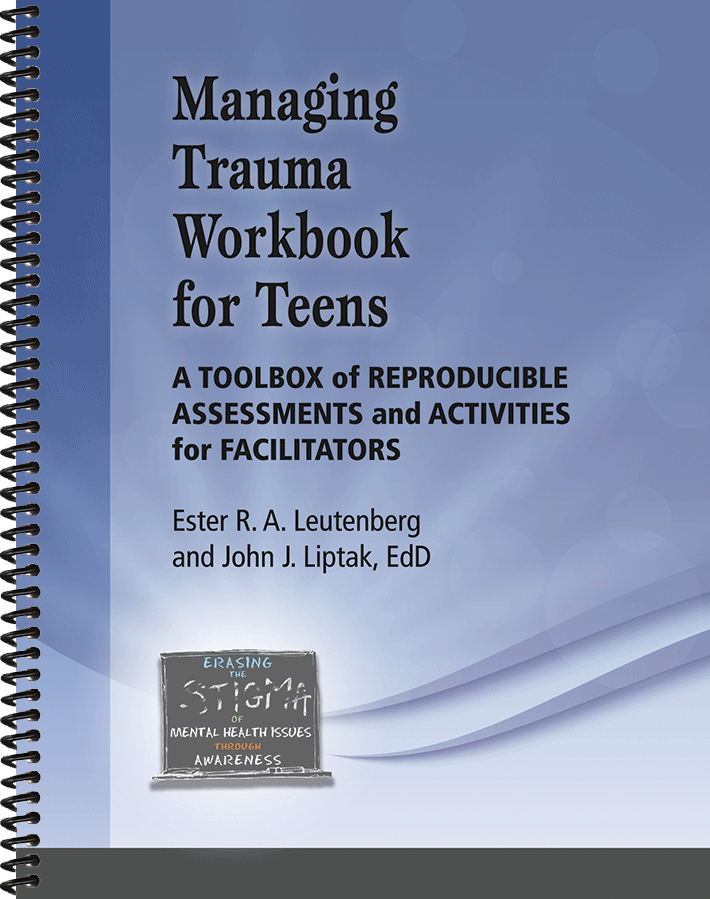
Practical Tools to Help Teens Understand and Recover from Trauma
The Managing Trauma Workbook for Teens equips facilitators, counselors, and educators with reproducible assessments and guided activities that help teens explore and process the effects of trauma. This teen trauma recovery workbook provides a safe, structured environment where teens can tell their stories, identify coping strategies, and begin to rebuild emotional strength and trust. Through guided reflection and self-awareness, teens learn to recognize trauma symptoms, reduce avoidance behaviors, and re-engage with daily life.
Designed for flexibility, this workbook can be used in schools, counseling programs, or youth groups. The reproducible worksheets encourage personal reflection, skill development, and open discussion—helping teens build resilience and reduce the stigma often associated with mental-health struggles.
This workbook is designed to use with clients who have been diagnosed with or may be showing signs of:
-
Post-Traumatic Stress Disorder (PTSD)
-
Trauma and Stressor-Related Disorders
-
Acute Stress Disorder
-
Adjustment Disorders
-
Reactive Attachment Disorder
-
Hypervigilance
-
Exaggerated Startle Response
In this workbook, we have used “trauma” as an umbrella term to describe mental-health issues related to these diagnoses.
Why This Teen Trauma Workbook Works
This resource provides trauma-informed exercises that help teens identify symptoms, practice coping strategies, and build emotional safety. The five awareness modules allow for reflection, expression, and growth at each stage of healing.
Modules include:
-
My Story: Safely share personal experiences and reframe them from a place of strength.
-
My Escape-ism: Recognize avoidance and numbing behaviors and learn grounding techniques.
-
My Transition: Explore healthy ways to move forward from traumatic experiences.
-
Tools for Coping: Practice specific strategies to manage re-experiencing and stress symptoms.
-
Erasing the Stigma of Mental Health Issues: Promote acceptance and self-compassion.
Who This Teen Trauma Workbook Helps
-
Counselors and therapists supporting adolescents with trauma or post-traumatic stress
-
Teachers and school psychologists implementing trauma-informed wellness programs
-
Parents and caregivers helping teens build safety, trust, and resilience
-
Youth facilitators and mentors guiding teens through recovery and emotional awareness
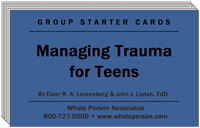 A Companion Managing Trauma for Teens Card Deck for Deeper Conversations
Pair the Managing Trauma for Teens Workbook with the Managing Trauma for Teens Card Deck.
Using the Discussion Starter Card Deck will break the ice, encourage openness, and help introduce a specific subject. Activity handouts included in these workbooks are reflective, easy-to-use exercises, presented in a variety of formats to accommodate multiple intelligences and different learning styles. Each question corresponds to a page in the workbook.
Sample Questions
-
Describe how telling your story can be healing. How much of your story have you told to your family and friends?
-
You may find it hard to trust or feel safe and secure with other people. Who are you able to trust, and whom do you feel that you cannot trust?
-
Have you ever meditated? If so, please describe your experience using meditation. Then, ask others in the group to share their experiences.
Take the Next Step Toward Healing and Growth
The Managing Trauma Workbook for Teens provides reproducible assessments and guided activities that help teens express their experiences, manage symptoms, and rebuild resilience. Available in print or as a PDF eBook.
For additional support, see:
Frequently Asked Questions About the Managing Trauma for Teens Workbook
Is this workbook appropriate for schools and youth programs?
Yes. The reproducible activities and discussions are ideal for classroom use, counseling sessions, and community programs.
Are the activities age-appropriate?
Absolutely. The exercises are written specifically for teens and address real-life experiences such as trust, safety, and emotional expression.
Can teens use this workbook on their own?
Yes. While facilitator support is beneficial, the workbook can also be used independently to encourage personal reflection and healing.
Does it help reduce stigma and build resilience?
Yes. The final module, Erasing the Stigma of Mental Health Issues, helps teens replace shame with acceptance and understanding.