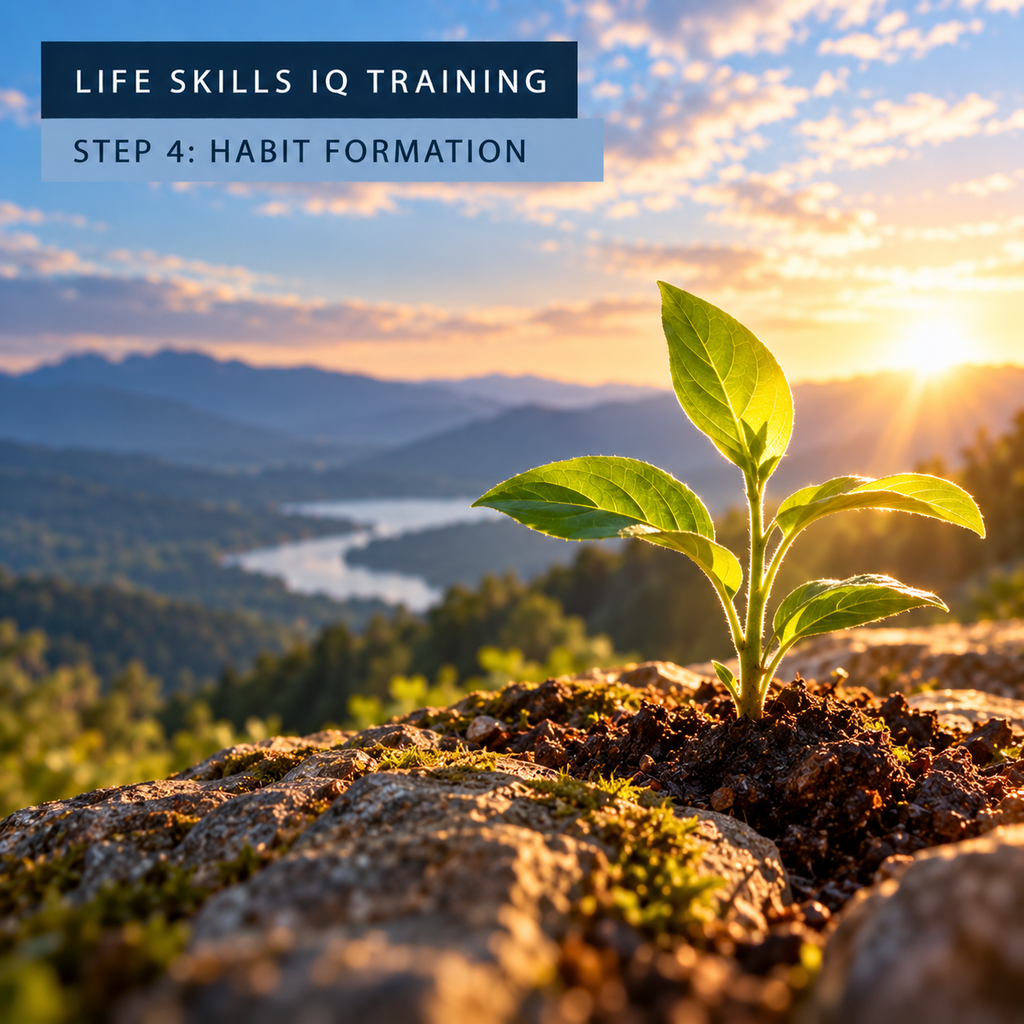
In this blog series, I am describing a research-based, scientific Life Skills IQ (LSIQ) Training process that bridges the gap between mental illness and mental health. LSIQ Training consists of four unique steps that are woven into Whole Person Associates’ mental health and wellness reproducible workbooks and card decks. The fourth of the four cognitive-behavioral steps to raise Life Skills IQ is habit formation.
The last step in the LSIQ Training process is performing the life skills in “real-world” situations until they become part of the client’s personality, are triggered when the client encounters a unique situation, and the client performs the skill with unconscious competence.
In the LSIQ Training process, the habit formation method is illustrated in Figure 1.
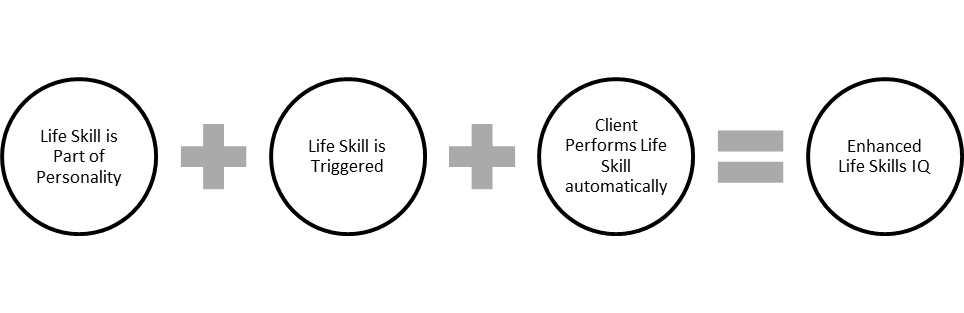
Figure 1: The Life Skills IQ Habit Formation Process.
Habits form through a repeating cycle of this “habit loop.” When clients repeat this process often in the same setting, their brain shifts control from the thinking part of their mind to the automatic part of their personality, making the behavior effortless over time. This is referred to as “personality plasticity.”
What is Personality Plasticity?
Personality plasticity is the brain’s remarkable capacity to adapt and alter inherent behavioral, emotional, and cognitive patterns over time. Rather than being biologically fixed, personality acts as a flexible, evolving construct that responds to life experiences, maturation, and targeted, intentional training interventions by therapists using LSIQ Training. Some facts about personality plasticity include:
- Plasticity represents the human drive to explore, engage with novelty, and integrate new life skills information.
- At the neural level, personality plasticity is driven by neuroplasticity and neurogenesis. Your life experiences continuously reshape the brain’s neural pathways, combining new neurons with existing ones to shape adaptable behavioral states.
- Studies show that when people proactively work to change specific personality traits, they experience new ways of interacting with the world.
The outcome of LSIQ Training is the focused acquisition of critical life skills that can help bridge the gap between mental illness and mental health. Clients who engage in intense, highly specific training using Whole Person Associates’ reproducible workbooks prompt their brains to rewire and strengthen neural pathways, solidify new cortical territories, and reshape personality interactions.
Personality Plasticity and Habits
Many people view habits as fixed, rigid aspects of personality. However, recent research suggests that habits are extremely “plastic” and capable of tremendous change and modification. This change and modification occurs through rewiring thoughts, emotionalizing skills, and forming habits (See Figure 2).
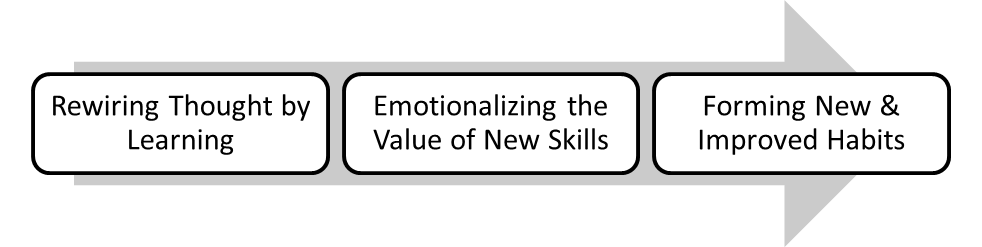
Figure 2: How Personality Plasticity Forms Habits.
Personality plasticity allows habits to form, adapt to new contexts, and become part of the client’s personality. This adaptability is vital to personality development, as repeated life skills behaviors subtly reshape personality traits over time.
Habit Formation in Therapy
For clients, identifying and relying on patterns is a fundamental cognitive skill that allows the brain to make sense of the world, anticipate events, respond proactively rather than reactively, and make decisions differently. To generate positive, healthy habit formation in therapy, therapists can use the LSIQ Training technique illustrated in Figure 3.
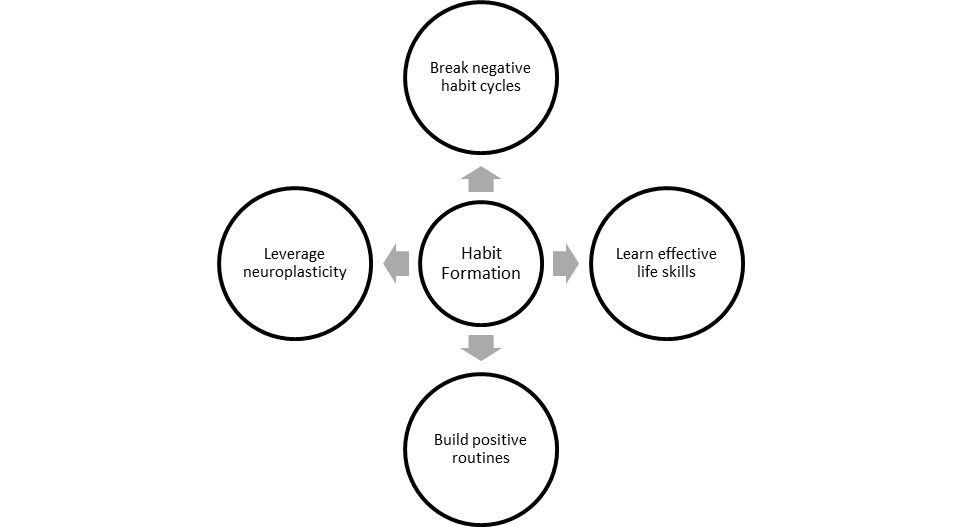
Figure 3: Generating Healthy Habits in Therapy.
Remember that personality plasticity is a way therapists can help clients consciously choose to replace maladaptive life-skill habits with adaptive ones, learn new life skills, build positive routines that reinforce those habits, and reshape their personality toward more desirable traits.
An Example of the Habit Formation Process
Therapists can use the Regain Control of Your Life workbook to stop reacting to negative news by blaming others. This activity teaches clients the life skill of owning the consequences of their actions, rather than continually blaming others. Therapists can use the journaling items the client completed to role-play various situations. Suggestions for reinforcing positive habits are included after the journaling activity.
Place No Blame
People with an empowering mindset take responsibility for their decisions, actions, and reactions. They do not blame others for their current situation or past events. When you blame others, you receive temporary relief from emotional pain associated with negative results. However, when you blame others, you eventually feel powerlessness and hopelessness. In the spaces that follow, identify the people you blame for anything wrong in your life.
| Bad Things That Have Happened to Me | Whom I Blame | Why I Blame the Person/People | My Role in the Situation |
| Example: I didn’t get the job I wanted. | The hiring manager. | He didn’t give me a fair chance. | I did not interview as well as I could have. |
Better Ways to Respond:
When you find yourself starting to blame people…
- Stop expecting life to be fair. In what ways do you do this?
- Be aware of blame language. Statements that include You should…, You never…, or You always… are blame language. With whom do you use this type of language?
- Own your part in situations. How can you improve your reactions and actions?
By Dr. John J. Liptak, Founder, Life Skills IQ Institute, www.lifeskillsiq.com